Inspired by water, made for pool—Professional pool product manufacturer since 1992
astrowavecn@gmail.com +86 15976410611


Views: 0 Author: Site Editor Publish Time: 2026-11-22 Origin: Site
A portable water pump moves water out of a swimming pool or through its filtration system without a permanent plumbing installation. For a standard residential pool, a lower horsepower unit handles basic circulation. Larger pools need more power to move water through the filter and keep clarity. This guide from Astrowave Pool explains how to size a pump, check flow rate and head height, choose a power source, and install the unit safely.
Cloudy water and algae growth often come back to circulation. If the pump cannot move the full water volume through the filter, debris and contaminants stay in the pool. Selecting the right equipment keeps the filtration system working as designed and helps control energy use.
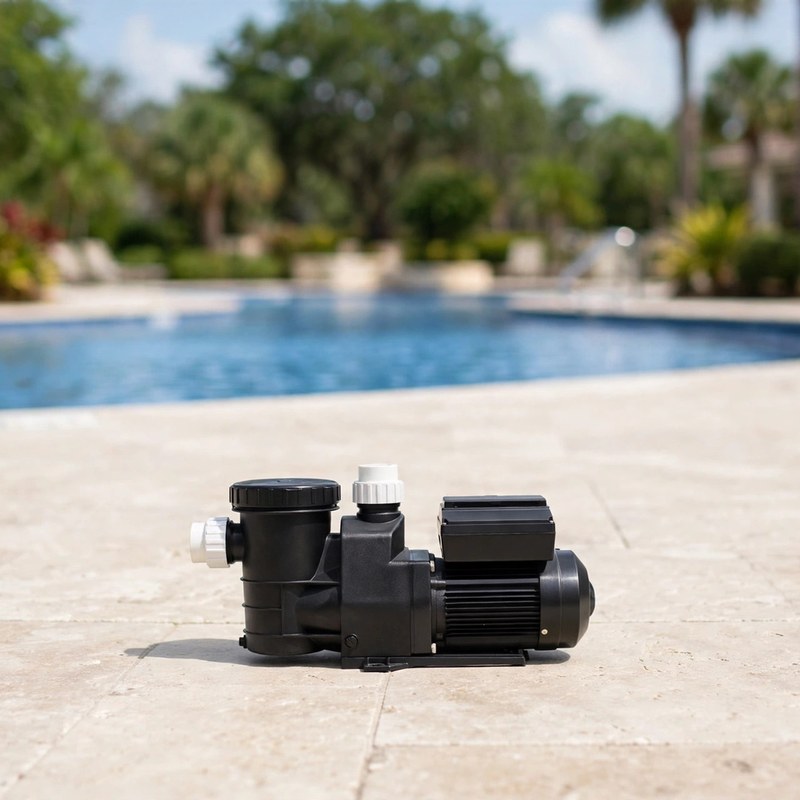
The right size keeps pool water clean, clear, and properly circulated. A pump that is too small leaves debris behind. A pump that is too large wastes energy and can strain the filtration system.
Start with the total water volume of the pool. For standard in-ground and above-ground pools, volume decides how much power is needed for effective water movement. Larger volumes need more horsepower to maintain circulation.
Pool Size | Pump HP | Flow Rate (GPM) | Turnover Time |
|---|---|---|---|
Small (under 15,000 gal) | 0.75-1 HP | 30-40 | 6-8 hours |
Medium (15,000-30,000 gal) | 1-1.5 HP | 40-60 | 6-8 hours |
Large (30,000+ gal) | 1.5-2 HP | 60-80 | 8-10 hours |
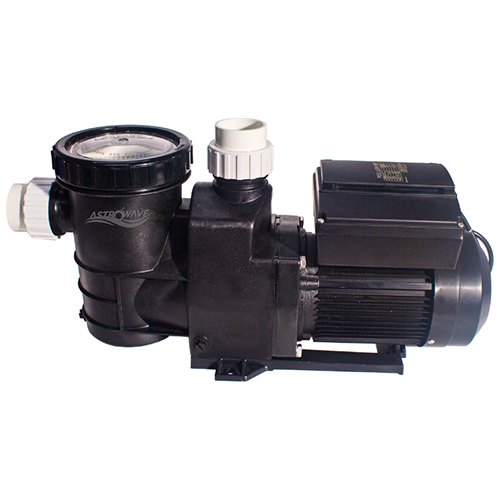
Flow rate and head height are the two figures to check after pool size. Flow rate, measured in gallons per minute (GPM), states how much water the pump can move. Head height is the vertical distance water must be lifted from the pool to the pump outlet. Both figures decide whether the pump can circulate water through the filtration system.
For every 10 feet of pipe run, add 1 foot of head height to allow for friction loss. Longer pipe runs and multiple elbows increase friction and need a higher head rating. Check filter compatibility as well: the pump flow rate should not exceed the filter maximum rated flow, typically 60-80 GPM for residential systems.
To find the minimum flow rate, divide the pool volume by 480, the number of minutes in 8 hours. A pool should cycle all of its water every 6-8 hours.
Portable water pumps run on different power sources. Electric models give steady performance where an outlet is available. Battery-powered and solar options suit locations without mains access, though output depends on charge and sunlight. Gas-powered models are portable but produce noise and exhaust.
Single-speed pumps run at one constant speed. They are simple to operate and cost less to buy, but they use more energy. Variable-speed pumps adjust the flow rate to the demand, so they use less energy during low-demand periods. The ESKP Series Variable Speed Pump for Pools uses a variable frequency drive to adjust speed: the ESKP200 runs at 1.5 kW / 2.0 HP with a maximum flow of 32 m3/h, and the ESKP300 at 2.2 kW / 3.0 HP with a maximum flow of 36 m3/h. The product page states energy saving of up to 75% against fixed-speed operation.
Power supply options include standard 115V electric for most residential pools, and 230V electric for larger pools, which needs professional wiring. Check the motor and voltage rating on the product page before ordering: the ESKP Series covers 110V / 220V / 380V at 50/60Hz, with an IPX5 rated motor, maximum suction lift of 2.0 m, and a 5L strainer basket.
For service life, look for corrosion-resistant materials such as stainless steel or reinforced thermoplastic, and thermal overload protection to prevent motor burnout. Regular maintenance includes cleaning the strainer basket and inspecting seals each year.
Different pool types need different pump features. Above-ground pools usually need less power because plumbing runs are shorter. In-ground pools need higher head ratings to lift water from deeper levels. Water features such as fountains and waterfalls increase total dynamic head and need additional pump capacity.
Above-ground pools typically need 0.75-1 HP pumps with 30-50 GPM flow rates. Self-priming models work well since the pump sits above water level. In-ground pools need 1-2 HP pumps with 50-80 GPM flow rates, and high-efficiency motors help manage energy costs. Saltwater pools need corrosion-resistant components to handle salt exposure, including stainless steel hardware and sealed motors, with regular maintenance to prevent salt buildup on internal parts.
When comparing portable water pumps, check the features that affect performance and service life. A self-priming design removes the need for manual priming. A large strainer basket reduces cleaning frequency. For residential areas, check noise: quality models operate at 50-60 decibels, similar to normal conversation, and variable-speed models run quieter at lower speeds. Place the pump on a vibration-dampening pad to reduce noise transfer.
Weight matters for a pump that is moved by hand: look for units under 30 pounds, with carry handles and a compact design for storage. Quick-connect fittings allow tool-free setup and takedown. Built-in timers allow automated operation schedules, digital displays show flow rate and energy use, and freeze protection activates automatically in cold weather.
Check warranty terms before buying: longer coverage usually indicates a higher quality build. Compare what the warranty covers for the motor and housing, and confirm that filters and seals are easy to obtain. Check customer reviews for long-term reliability reports, and confirm that service support is available in your area.
Total cost includes the purchase price, energy use, and maintenance. Variable-speed models cost more up front and use less energy in operation, so the saving appears over time. Budget for installation and for seals and parts over the life of the unit. For a price on a specific model, check the product page or contact Astrowave Pool directly.
Place the pump on a level, dry surface near a GFCI-protected outlet. Keep electrical connections away from water and allow ventilation around the motor. Follow the manufacturer guidelines for plumbing connections and priming.
Use GFCI-protected outlets for all pool pump connections. Keep extension cords away from water and use outdoor-rated cables. Have a licensed electrician install 230V models. For plumbing, use Schedule 40 PVC pipe, install unions for easy pump removal, and check that all connections are watertight to prevent air leaks.
Start with the total water volume of the pool. Small pools under 15,000 gallons typically need 0.75 to 1 HP, medium pools 15,000 to 30,000 gallons need 1 to 1.5 HP, and large pools over 30,000 gallons need 1.5 to 2 HP.
Divide the pool volume by 480, the number of minutes in 8 hours, to find the minimum flow rate in gallons per minute. A pool should cycle all of its water every 6 to 8 hours.
Single-speed pumps run at one constant speed. Variable-speed pumps adjust the flow rate to the demand, so they use less energy during low-demand periods.
Place the pump on a level, dry surface near a GFCI-protected outlet. Keep electrical connections away from water, use outdoor-rated cables, and have a licensed electrician install 230V models.
Choosing a portable water pump means matching pool size, flow rate, head height, power source, and budget. The variable-speed pump from Astrowave Pool covers that range with four models, ESKP100, ESKP150, ESKP200, and ESKP300, a variable frequency drive, and a maximum suction lift of 2.0 m. Compare the models against your pool volume and plumbing layout, and contact Astrowave Pool if you need help selecting the right unit.
For inquiries about our product line or to discuss a solution for your project, please contact our technical sales team.
Click to Contact Astrowave Pool
or Email us: astrowavecn@gmail.com


